 My Fisio Agenda
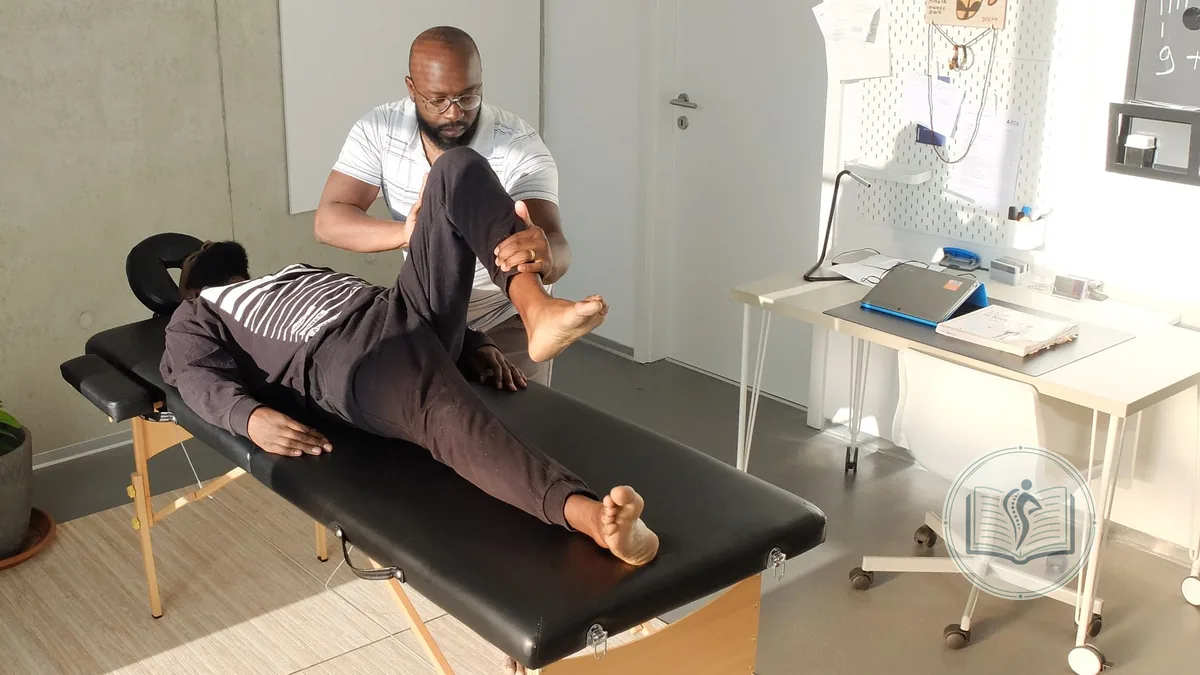
Plenty of physiotherapists start out with whatever is to hand: a paper diary on the front desk, the calendar on their phone, a spreadsheet with patient details and invoices typed up in a Word template. While the practice is small, that works. The day you find yourself writing up session notes at nine in the evening, or scrolling through your personal WhatsApp to see who confirmed Thursday's appointment, is usually the day you start looking for physio software.
This guide is written for that moment. It covers what good physiotherapy software has to do, what the law in Spain asks of you (data protection, clinical records and VeriFactu invoicing), what changes between working on your own and running a clinic with several physios, what it costs and what to ask before you pay for anything. At the end we explain how My Fisio Agenda handles all this, but the criteria work for comparing any product.
What physio software is (and what it isn't)
Physio software is an application that brings together your appointment diary, each patient's record with their clinical notes, session reminders, payments and invoices. What sets it apart from a calendar or a spreadsheet is that everything is linked: the appointment knows who the patient is, the session goes into their record and the invoice is built from what you have already entered, without typing it twice.
Two kinds of tool often get mixed up. Search for software for physios and you will find practice management systems, which are what this article is about, and apps for prescribing exercise programmes with videos. They can sit side by side, but they solve different problems. Here we are talking about the admin and clinical side: appointments, patient records, signed documents and money.
You don't need the biggest system on the market either. If you are just starting out, with a handful of patients and no invoicing yet, a phone calendar may do for a few months. Trouble starts when health data ends up spread across your personal phone, paper and email, because it is specially protected information and very hard to look after properly that way.
What features physiotherapy software should have
Some systems do everything; others do less but do it well. These are the features a physiotherapy practice uses every day. If one is missing, you end up filling the gap with another app, which is exactly what you were trying to avoid.
A diary built for courses of treatment
Physiotherapy is delivered in courses: low back pain might need eight sessions, a knee rehab several weeks. The software should let you book recurring appointments (weekly, fortnightly or monthly) without entering them one by one, block out time for a training course or a home visit, and switch between day, week and month views. If you work with treatment rooms, assigning each appointment to a room stops two colleagues from counting on the same couch at the same time.
Patient records and session-by-session clinical notes
After the diary, clinical notes are what you will use most. Look for a separate note per session (area treated, pain score, technique, progress) and the option to add your own fields, since not every physio records the same things. It also helps to attach the orthopaedic surgeon's report, an MRI or progress photos to the record, and to export the full record as a PDF when a patient asks for it.
Bear in mind that in Spain clinical documentation has to be kept for at least five years after each episode of care ends, under article 17 of Law 41/2002 on patient autonomy (in Spanish). Your software has to keep it for that long and let you export it if you ever switch.
WhatsApp reminders patients can reply to
Of all the features, WhatsApp reminders are the one you notice soonest in your diary. Ideally they go out on their own, say 24 hours before, and the patient confirms or cancels with one tap, so you can see in the diary who has confirmed and which slot has opened up. Check how many automatic messages each plan includes and whether you can also send manual reminders from your own WhatsApp.
Informed consent signed on a phone or tablet
As a general rule, patient consent in Spain is verbal, but the same Law 41/2002 (article 8) requires it in writing for invasive procedures and for those with significant risks. In physiotherapy the clearest case is dry needling. Software that collects a finger signature on a tablet for the informed consent form, files it as a PDF in the patient record and has separate templates for adults and minors saves you printing, scanning and filing.
VeriFactu invoicing and the VAT exemption
Royal Decree 1007/2023 requires invoicing software to produce, with every invoice, a chained record that cannot be altered, plus a QR code. The dates currently in force are 1 January 2027 for companies and 1 July 2027 for everyone else, self-employed professionals included. In October 2026 the Spanish Treasury announced it wants to push them back to October 2028, but until that appears in the BOE, the official gazette, the 2027 dates are the ones that count. You can keep track on the Spanish Tax Agency's VeriFactu page.
When comparing products, ask whether the software issues VeriFactu invoices with your own digital certificate, whether it applies the VAT exemption for healthcare services (article 20.1.3 of Law 37/1992) and income tax withholding when you invoice a company, and whether it lets you invoice per patient, per clinic or per physio.
Session packs, payments and statistics
If you sell packs of five or ten sessions, the software should take each session off the pack and show how many the patient has left. Part payments (half today, the rest next week) and outstanding balances should be visible at a glance. And to decide on opening hours or prices, simple statistics are enough: income and sessions per month, per session type and per day of the week.
Software for self-employed physios or physiotherapy clinic software: what changes
What you need depends a lot on how you work.
If you are a self-employed physio, mobility and speed matter most: checking the diary on your phone between patients, working at two practices or doing home visits with a single diary, and getting month-end invoicing done without losing an afternoon. An affordable plan with unlimited patients is usually enough.
A clinic with several professionals brings other needs: seeing everyone's diaries in real time, sharing out rooms and couches, deciding who sees what, working out commissions and settlements, and invoicing in the clinic's name. That is what physiotherapy clinic software with a clinic plan is for: one account for the whole team, with each physio's diary inside it.
Data protection: the minimum your software must meet
The General Data Protection Regulation treats health data as a special category (article 9), and the software you choose will process it on your behalf. Before signing up, check:
- that the provider signs a data processing agreement with you, as article 28 of the GDPR requires;
- where the servers are (the simplest option is inside the European Union) and whether the data is encrypted, backups included;
- whether you can turn on two-step verification and see which devices have accessed your account;
- how your data will be handed back if you cancel.
The Spanish Data Protection Agency (AEPD) has a section on health data with patients' rights, guides and legal reports for the sector, useful if you practise on your own and want to know what applies to you.
How much physio software costs
Prices vary a lot and are rarely comparable at first glance. Look past the headline figure and check the details:
- whether you pay per physio, per clinic or by number of patients;
- whether WhatsApp reminders are included or charged separately, and how many you get each month;
- how many invoices you can issue and how much storage you get for documents;
- whether there is a minimum term and whether VAT is included;
- whether you can try it without entering a card.
For reference, My Fisio Agenda's plans for individual physios run from €4.99 to €29.99 a month and clinic plans from €99.99 to €159.99 a month, with no minimum term and VAT added on top. You can see what each one includes on our plans and pricing page.
Eight questions to ask before you sign up
Get the answers in writing. With them, comparing two or three options takes an afternoon.
- Can I import my patients from an Excel file or a CSV?
- Does it work on a phone and a tablet without installing anything?
- Can patients confirm or cancel from the automatic reminders?
- Does it issue VeriFactu invoices with my digital certificate?
- Can I adapt the clinical notes with my own fields?
- Who signs as data processor, and where are the servers?
- Is there a minimum term? What happens to my data if I leave?
- Who answers when something breaks, and how: email, phone or WhatsApp?
Then use the free trial with a real week of your diary. It is the quickest way to find out whether the software fits the way you work or forces you to change it.
Moving from paper or a spreadsheet without losing a week
Switching feels like more work than it really is if you take it in stages:
- Import your patient list from your spreadsheet or from the CSV your old diary exports. Name, phone and email are enough to start; the rest can be filled in at the next visit.
- Set up ongoing courses of treatment as recurring appointments, so you don't have to book week by week.
- Switch on automatic reminders from day one. Patients notice straight away.
- Check your consent form template and your billing details, and have your digital certificate ready if you are going to invoice with VeriFactu.
- Keep the paper diary as a backup for a couple of weeks, then retire it.
If you work with a colleague or a receptionist, show them the shared diary a few days before the switch.
My Fisio Agenda: physio software made in Spain
My Fisio Agenda is the software for physiotherapists we have built for practices and clinics in Spain. It runs in the browser on a computer, phone or tablet, in English, Spanish and Catalan, and covers everything in this guide:
- a diary with recurring sessions, blocked-out time, rooms and several work locations;
- private, encrypted clinical notes for every session, with your own fields and patient files;
- automatic WhatsApp reminders with buttons to confirm or cancel, plus unlimited manual reminders from your own WhatsApp;
- informed consent forms signed digitally on a phone or tablet;
- VeriFactu-ready invoicing, sent straight to the Tax Agency with your certificate if you switch that mode on, with the healthcare VAT exemption and invoices to companies with withholding;
- session packs, part payments and statistics with a PDF report;
- the My space portal, where patients see their upcoming appointments, cancel them or request a new one;
- servers in the European Union, encrypted daily backups and two-step verification.
You can try it free for 1 month, no card needed. If you work with other physiotherapists, clinic plans add the whole team's diary in real time, rooms, commissions and clinic invoicing. And if you get stuck at the start, support answers on WhatsApp or by email.
Frequently asked questions about physio software
Short answers to the questions we hear most from physiotherapists who are choosing software.
What is the best physio software?
There isn't one that is best for everyone. A self-employed physio usually cares most about price, phone use and reminders; a clinic needs shared diaries, rooms and clinic invoicing. Write down what you do in a typical week, get answers to the questions in this guide and try two options with your real diary before deciding.
Is there any free software for physiotherapists?
You can get organised for free with a calendar and a spreadsheet, but you won't get protected clinical notes, signed consent forms or VeriFactu-ready invoices. Practice management software is usually paid, and many products offer a free trial: My Fisio Agenda gives you 1 month free with no card, and its cheapest plan costs €4.99 a month plus VAT.
Does physio software have to comply with VeriFactu?
If you use it to issue invoices in Spain, yes. Royal Decree 1007/2023, with the dates set by Royal Decree-law 15/2025, applies from 1 January 2027 to companies and from 1 July 2027 to everyone else, self-employed professionals included. In October 2026 the Treasury announced it wants to delay it to October 2028, but until that is published in the BOE it makes sense to prepare for 2027.
Can I use it on my phone?
Yes. My Fisio Agenda runs in the browser on your phone, tablet or computer, with nothing to install. Between sessions you can check the diary, open a patient's record, send a reminder or collect a signature on a consent form.
Does it work for a clinic with several physiotherapists?
Yes. Clinic plans cover up to 5, 10 or 15 physiotherapists, each with their own diary. From the clinic account you see every diary in real time, organise rooms, work out commissions and settlements and issue the clinic's invoices.
How do I move my patients over from Excel?
With the import wizard: you upload the Excel file or the CSV your old diary exports, the software detects the columns, you check the preview and confirm. You can import appointments too, and patients with the same phone number or email are never duplicated.
How long do physiotherapy clinical records have to be kept in Spain?
At least five years from discharge at the end of each episode of care, under article 17 of Law 41/2002. Some regions set longer periods for part of the documentation: in Catalonia, for example, informed consent forms and discharge reports are kept for fifteen years. Check the rules in your region.